


Graphic & VIDEO Design
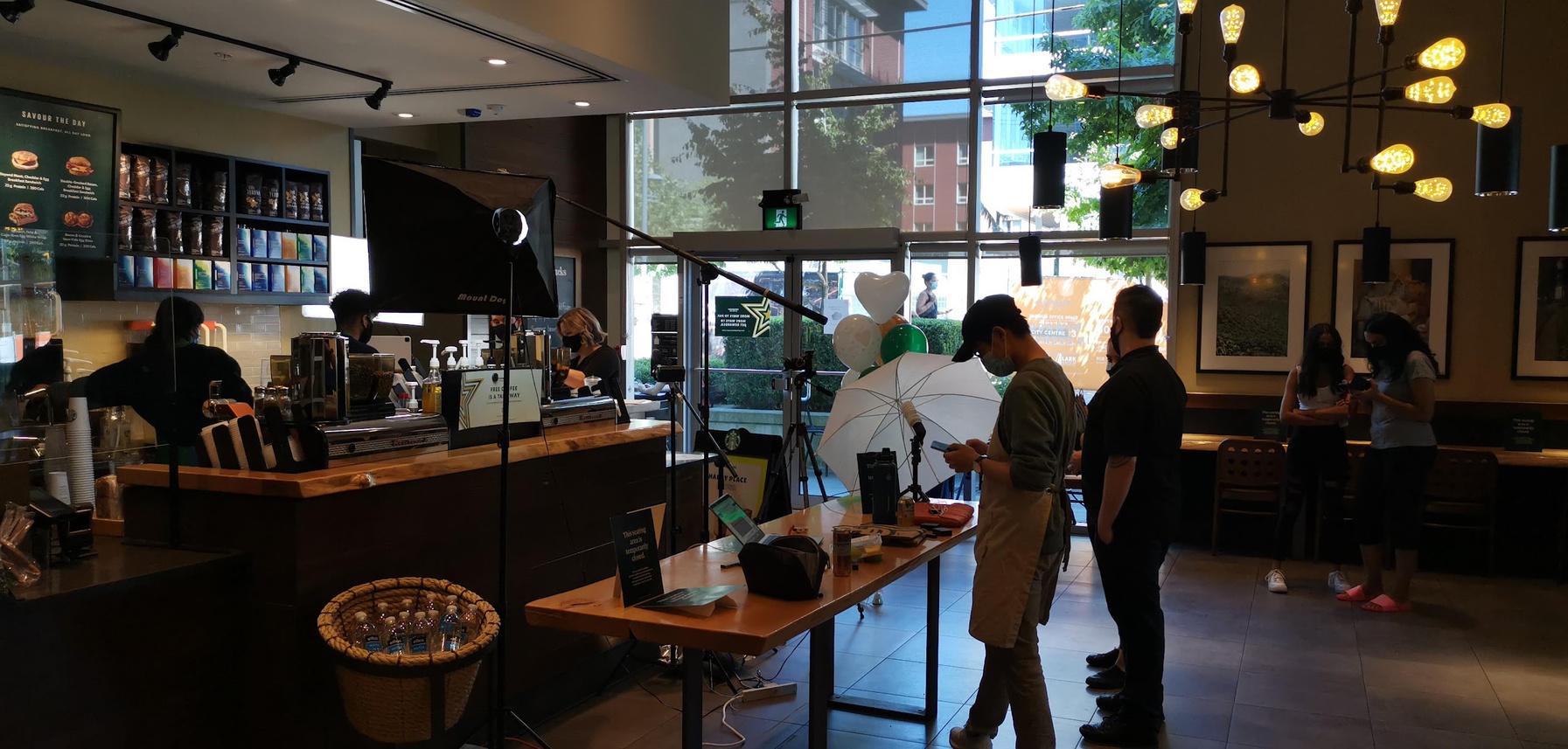
Recruiting Cards
Branding & Recruiting Design
While there is an official Starbucks-issued business card, many of the departments and partner-networks within the organization lack a dedicated design and calling card to help support its recruiting needs. In designing these business cards, I leveraged some minor but important design principles from the official design - specifically, that of the intentional lower-casing of the business title so as to emphasize the founding principle of Starbucks - that regardless of position and employment, we are all partners.


Pan-Asian Partner Network
Leveraging the Siren
For this particular design, I focused on the merger of the Siren with the waves of the Pacific Ocean featured in the Logo adorning the background.
Featured to the left is the original draft layered below the final copy, taking into account primarily the accessibility of our social media accounts, as well as featuring the official logo of the Pan-Asian Partner Network more prominently.
Videography
Social Media & Event Videography
Colour, Thumbnails, Humanity
This year, I had the opportunity to take on some major projects, including the filming, documenting, and production of the first major North American Barista Championships for the Starbucks Coffee Company.
Social Media Content
Reach, growth, Authenticity
Sipping Tea Series
Determination & Adversity
In collaboration with the Women’s Impact Network, I had the chance of personally conducting interviews with two amazing women, and feature two more. The Reels featured on the left are minute-long clips of their most powerful messages.
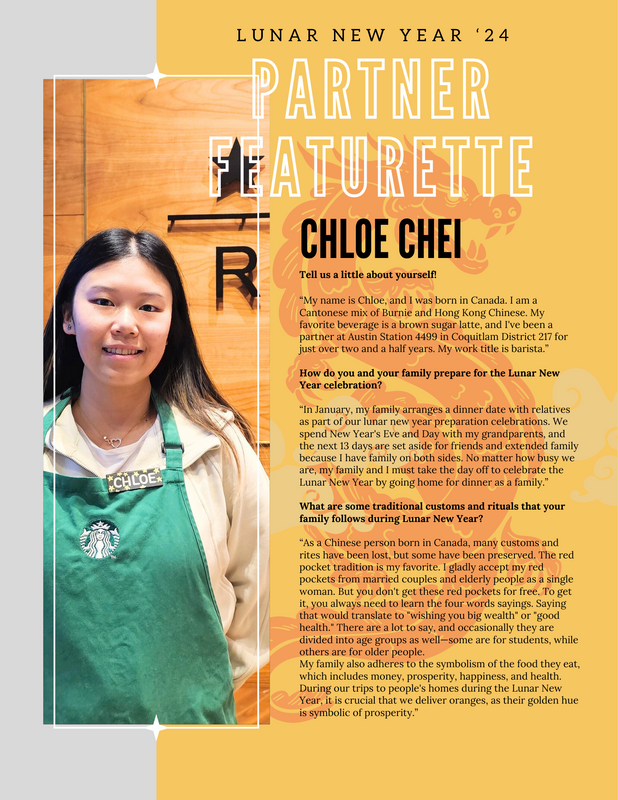
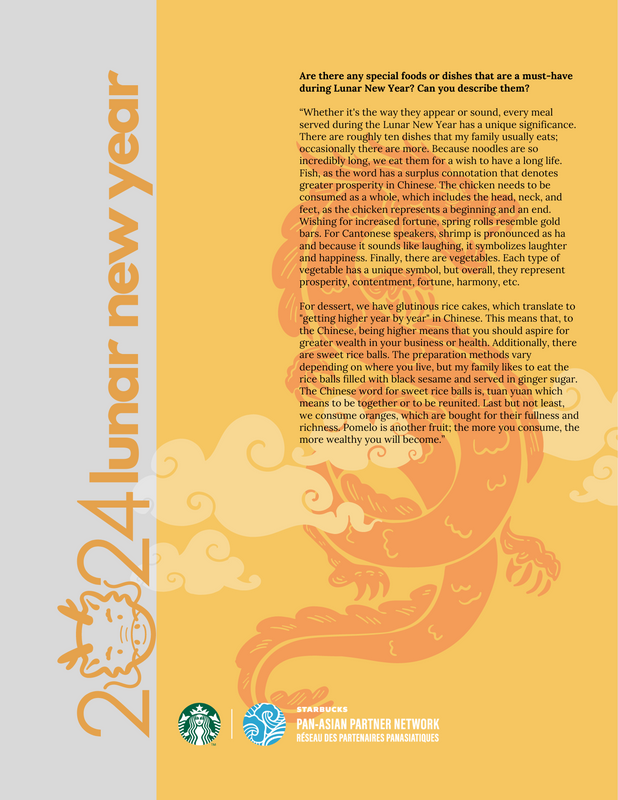
Lunar New Year Celebrations ‘24
Our siren’s voices


RESUME

Store Manager / Communications Manager
I am a people-oriented, results accountable store manager passionate about effective and impactful communications, coaching for performance and development, and optimizing project management. I aim always to better the experience of our partners on all levels by always being a servant leader first and foremost, and always giving everything I have to offer for that mission.
On the side, I am passionate about bringing the best out of the people around me, and platforming them.
Key Competencies
Effective Communications
Strategic planning
Time Management
Project Management
Optimizing Operations
Coaching for Development
Graphic Design
Storyteller
Servant Leadership
Professional Experience
CPPN Communications Manager
June 2023 - Present
Responsible for all major communications for the CPPN across Canada. Created communications pipelines and reset communications standards to uplevel the network’s ability to reach a larger audience. Primary project manager for all communications projects for the CPPN, ranging from written interviews, corporate communications, social media marketing, and longform written pieces, with an intense focus on culture and authenticity.
Accomplishments:
- Increased our Social Media Outreach by an average of 400+ views per post from 50-100.
- This means reaching around 80-90% of our membership list, with our highest viewed reel exceeding 1000 views
- Created long-lasting communication pipelines and systems that will help all future Communications executives continue to evolve and improve the impact of Exec-to-retail communications.
District Hiring Advisor
June 2020 - Present
Starbucks Coffee Company
April 2019 - Present
Store Manager
Managed a variety of different businesses, ranging from low-volume cafes, high-volume kiosks, and now a high volume drive-thru.
Accomplishments:
- Accomplished record high customer experience scores in every store I’ve managed;
- Achieved consistent 22%+ TC through strategic P&L analysis and strong focus on operational fundamentals.
- Store Manager Trainer & SSV to ASM Development Coach, creating programs to develop top talent in our district rosters.
- One of the first major DT stores to achieve a consistent sub-55 Peak OTW time while maintaining a maniacal focus on the Customer Experience & operations.
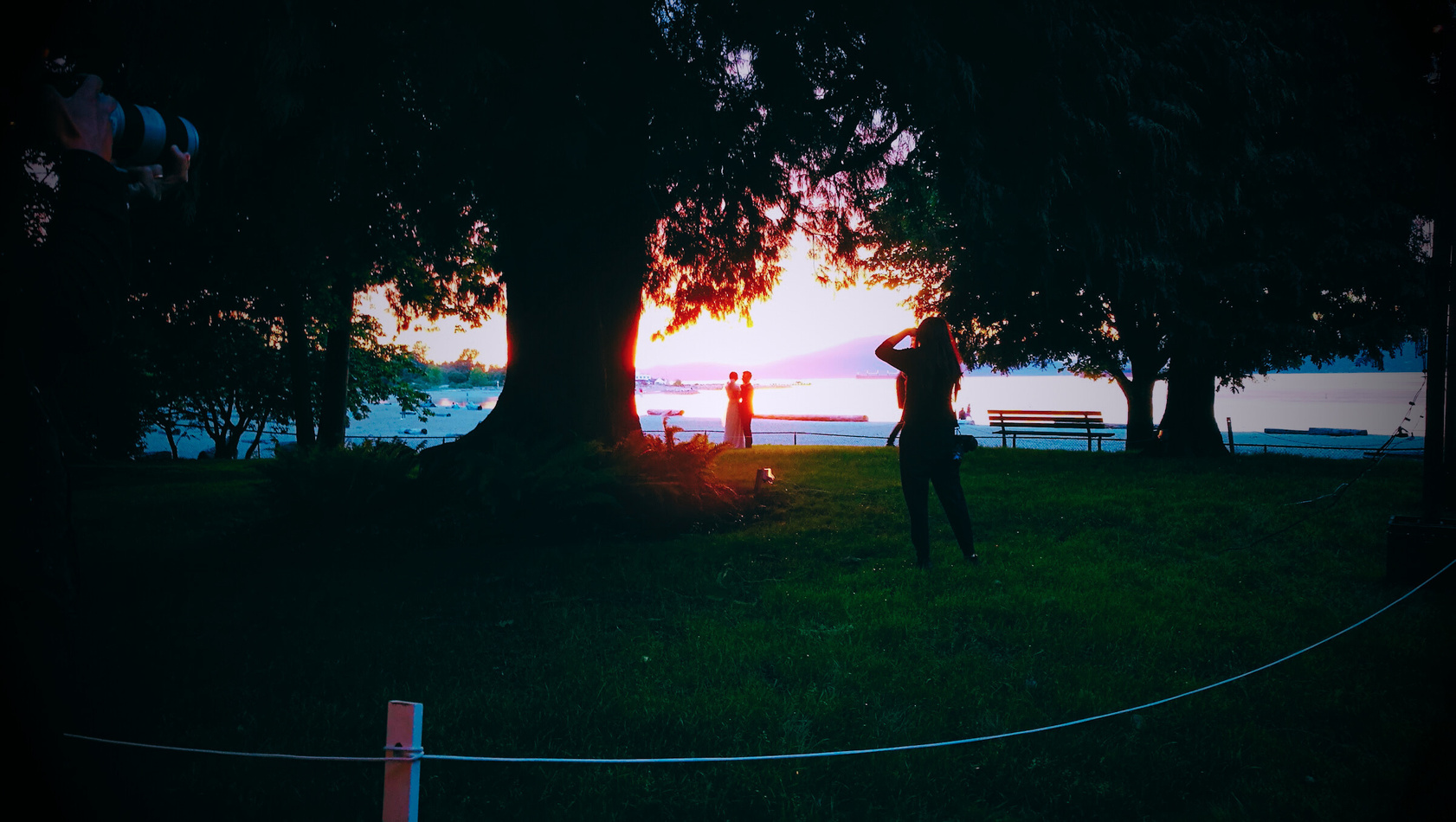
A small tribute
for a dear, departed friend
T
he very first job I ever worked was with Charlie at Sarpino’s, a local pizza place. He’d gotten me the job in part because he was good natured and in part because our manager Nick, a bald, goofy, eyebrowless, but kind Vietnamese man, lived his life a quarter mile at a time. I was to work the Sundays – which was a solo shift – until the night crew
came on to take over.
Charlie would frequently come over to my basement suite on Saturday Nights, and we would game like absolute degenerates and not sleep until 4am even though I worked at 1030 the next day. Looking back, maybe it was no surprise that Sarpinos closed not too long after I joined the team.
We seemed to have a thing for basements. Our next era was when we became roommates for University. A family friend had introduced us to this family who was in the process of renovating their – yes, you guessed it – basement and wanted to rent it out to a couple of good, Asian, well behaved university students. We thought the joke was on them.
We experienced a lot together in those subterranean havens. We got to experience what it was like to have your landlord turn off the heat in the dead of winter. We got to see a racoon stare us down in a game of chicken before knocking our trash over. One night, we had a police officer enter the house with his weapon drawn through our basement because he had received a 911 call and no one was answering the front door. We developed an absolute hatred for our landlord’s soggy sandwiches.
We also learned a lot about each other. We learned that we shared a deep love for the humor that was absurd or offensive. We learned that we had no self-control. And we learned that if we got drunk enough, sometimes, we could share those darker, more uncomfortable pieces of ourselves. We could talk about shame and uncertainty. About Failure and fear. About regret.
I swung in and out of Charlie’s life over the next few years. Some of that time, I did so purposefully, and pettily. The split was not helped by the fact that at our core, we were very different people, held together for the most part by our hobbies.
Then, somewhere in those meandering years of lost youth, he sorted himself out and got his life together. And it really felt like he’d left me behind for good, a solemn finale to our friendship; that is until one day, he invited me over to his house despite us not having spoken for over half a year, and announced that after 10 long years, he was getting married. He asked me to be his best man; and I accepted, even though I didn’t deserve it.
I’ve met many of his close friends since then – better men, women, and friend than I ever was for him. He made good friends, because he was one. He always gave more than he took. He was generous, and accepted generosity in kind.
When I faced my own trials, he walked me through the woods with a quiet wisdom. He taught me strength.
A final story;
Charlie told me once in a kind of a throwaway manner about this time he had rolled his toy underneath the couch as a kid, and how he’d started crying cause that’s what kids do.
And his father looked at him, and in that familiar, firm, but quiet voice told him to “Stop. Crying won’t help you get that toy out from under the couch.”
He said to me that when he heard that, something clicked. Instead, he reached out as deep as his hands could go, and plucked his toy back out.
He lived his life like that; sporting an eternal boyishness, walking each step with an electrifying joy and admiration for life and all its small, unexpected pleasures. In tough times, he moved forward with a passionate self-belief that no mountain was ever too high. Every step he took were in pursuit of the man he saw in his father, and the man he wanted to be.
He was a good, decent man – in all the best ways we think of those words.
And yet, my favourite memories of him will always rest in those dimly lit basement suites, a cold beer cracked open in our hands, commiserating, laughing, way too caffeinated on red bull, way too sleep deprived to go to work the next day. He exists for me in that special, separate place as he has done all his life. One day these memories will bring only joy; for now, I’ll simply be content with having a good cry and a swig every now and again.
To our eternal boy, husband, refuge, clown, our shoulder, our consummate hype man, and very, very good guy and the bestest friend.
To Charlie